“The new Q3 strategy documentation currently has an 82% comprehension rate across engineering, up 15% from last week.”
Capture
Turn raw knowledge into high-fidelity signal.
Understand
Model what your organisation actually means.
Ask
Query knowledge in natural language.
Frame
Turn meaning into communication.
Distribute
Deploy across your organisation.
Measure
See what was actually understood.
Improve
Use real signals to strengthen the next version.
Remember
Every message strengthens the system.
Orient is not a set of disconnected tools. It is one loop.
Four core capabilities work together to turn raw input into communication, distribute it across the organisation, measure whether it was understood, and improve it over time.
Creation
Turn messy knowledge into clear, purposeful communication.
Comprehension
See whether people truly understood, not just whether they opened it.
Refinement
Use real signals to strengthen the next version.
Memory
Build long-term organisational understanding that compounds over time.
One system. Seven core surfaces.
Orient becomes practical through a connected set of product surfaces for shaping communication, exploring knowledge, measuring understanding, and building memory.
Workspace
Bring people, projects, communication, and sources into one shared environment.
Library
Collect documents, webpages, notes, transcripts, media, and research into one system.
Frame
Turn structured meaning into decks, briefs, memos, and narratives.
Discover
Explore ideas, patterns, relationships, and linked material across the system.
Ask
Query content, context, and memory in natural language.
Measure
See what landed, what broke, and where meaning decayed.
Intelligence
Surface signals, risks, changes, and patterns across the organisation.
Close the loop.
Every step feeds the next. Orient captures what your organisation knows, models what it means, helps you shape it into communication, distributes it across teams, and measures whether it was understood.
So how does Orient actually work?
Communication becomes a continuous workflow — not a one-off task.
Capture
Capture knowledge from anywhere — without flattening it into summaries. Connect your and — Orient does the rest.
Multiple inputs merge into one structured model — preserving decisions, context, and intent.
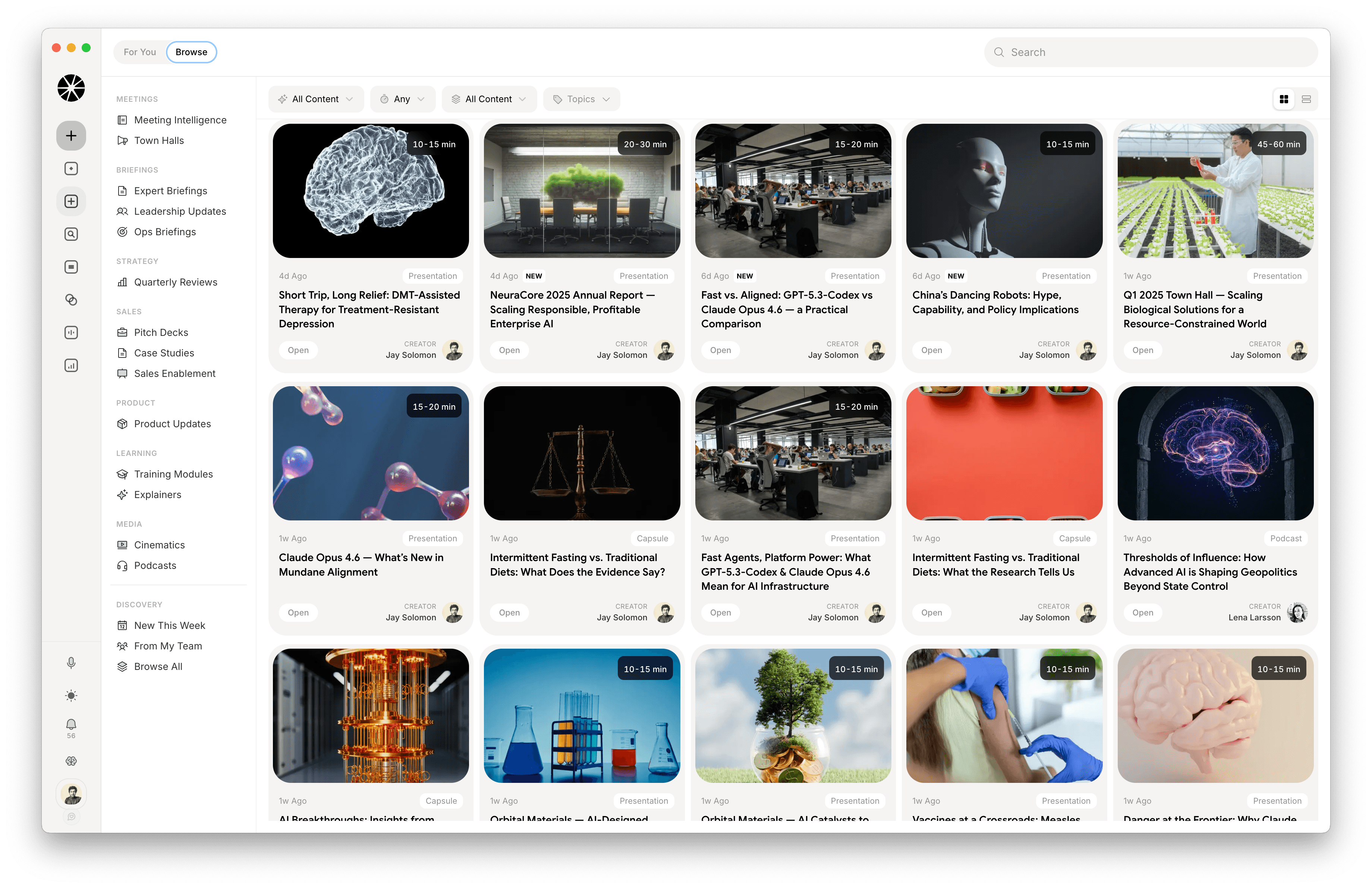
Every kind of knowledge, in its original form
Documents. Board packs. Meeting transcripts. Slack threads. Voice notes. Research. Multiple sources merge into a single structured input.
What you can bring in
Understand
Raw information becomes structured meaning you can build on.
Topics and Relationships
How ideas connect — themes, dependencies, conceptual clusters.
Decisions and Actions
Every decision point and commitment — linked to its source.
Key Entities and References
People, teams, projects, dates — identified and cross-referenced.
Tone and Complexity
Reading level, register, structural complexity — matched to audience.
Narrative Structure
Setup, argument, evidence, conclusion. Structure before surface.
A messy meeting transcript becomes:
Clear decisions
Assigned actions
Framed tradeoffs
Stored rationale
Orient doesn’t summarise. It models — so you can ask questions, trace reasoning, and build on what was actually said.
Ask
Query organisational knowledge directly.
Ask what was decided, where a topic evolved, which teams are struggling with alignment, or how communication changed over time.
Frame
Turn meaning into communication.
Different formats.
Same underlying structure.
Strategy decks
Cinematic presentations with semantic layouts and brand-aware design.
Product updates
Structured narratives that land with clarity across teams.
Onboarding
Knowledge transfer that preserves judgement, not just information.
Case studies
Evidence-led storytelling from research to recommendation.
Live briefings
Live-ready narratives built from the same underlying model.
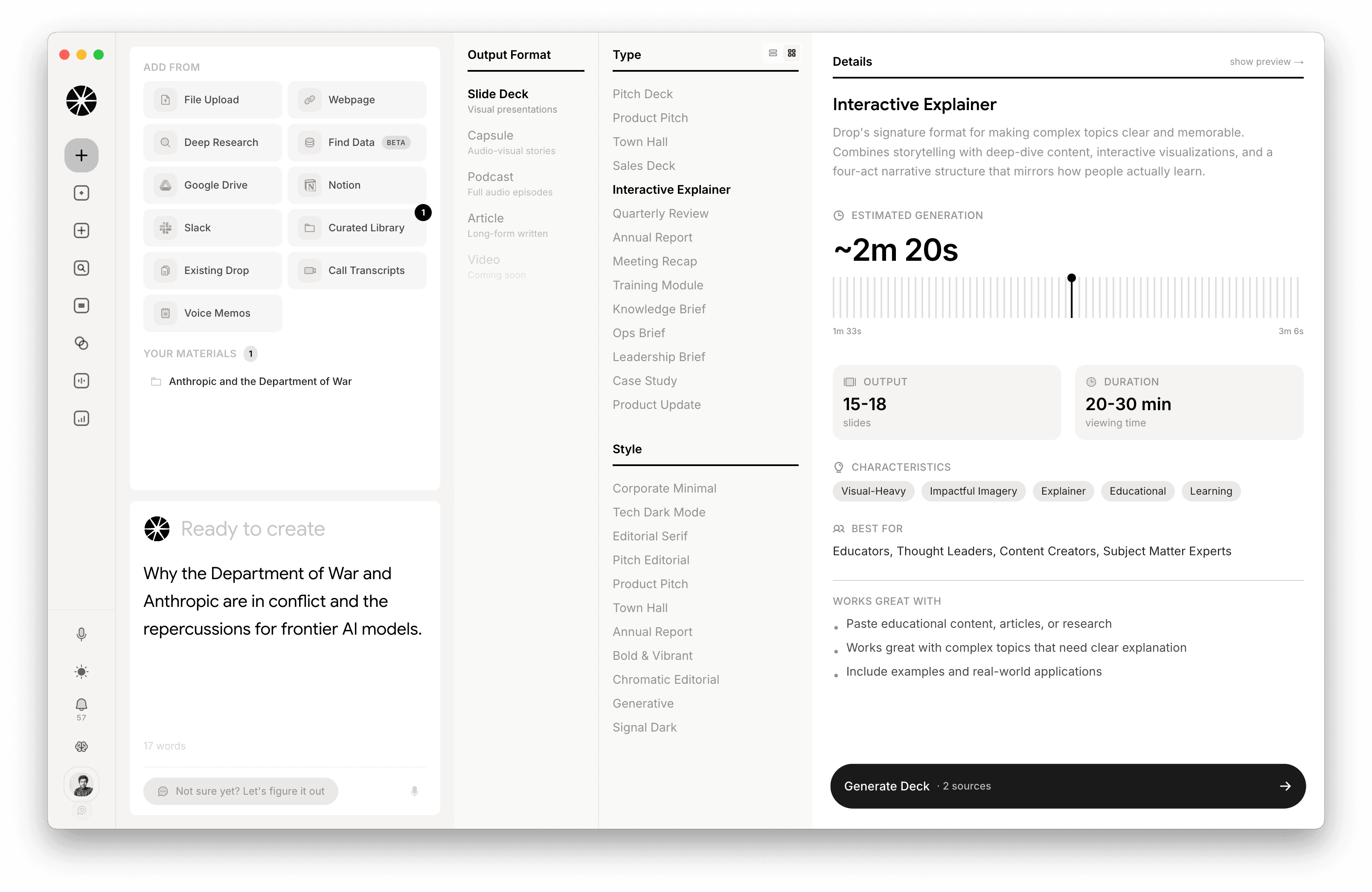
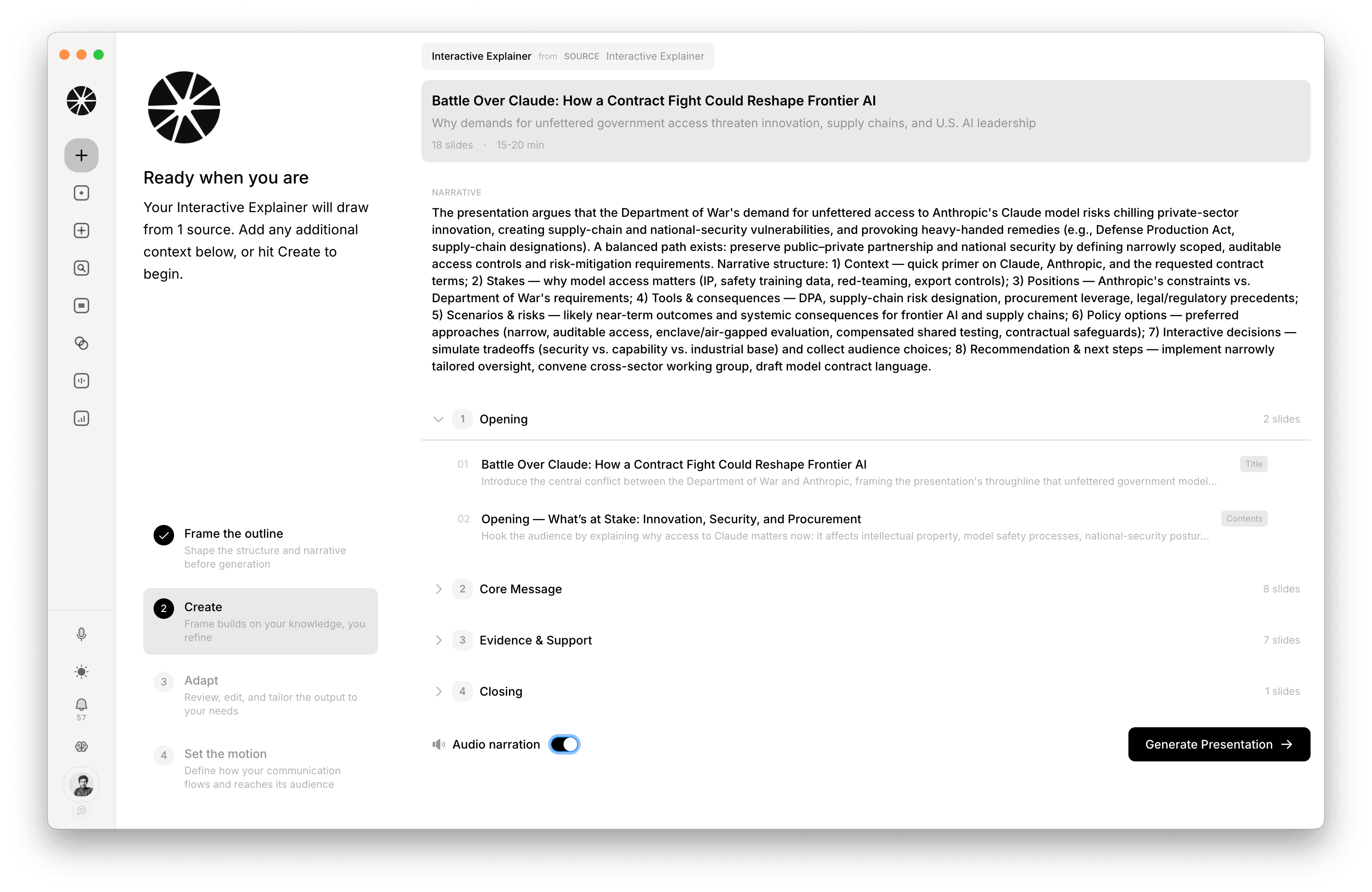
Different formats. Same underlying structure. Strategy decks, product updates, onboarding, case studies, and live briefings all emerge from the same meaning layer.
Distribute
Not just delivery. Transformation.
You don’t just see who opened something — you see how understanding propagates.
Across teams. Across layers. Across time.
You watch knowledge flow — where it starts, how it spreads, and who it changes.
Every interaction writes a node in your information graph — turning isolated messages into a living, evolving map of understanding.
Measure
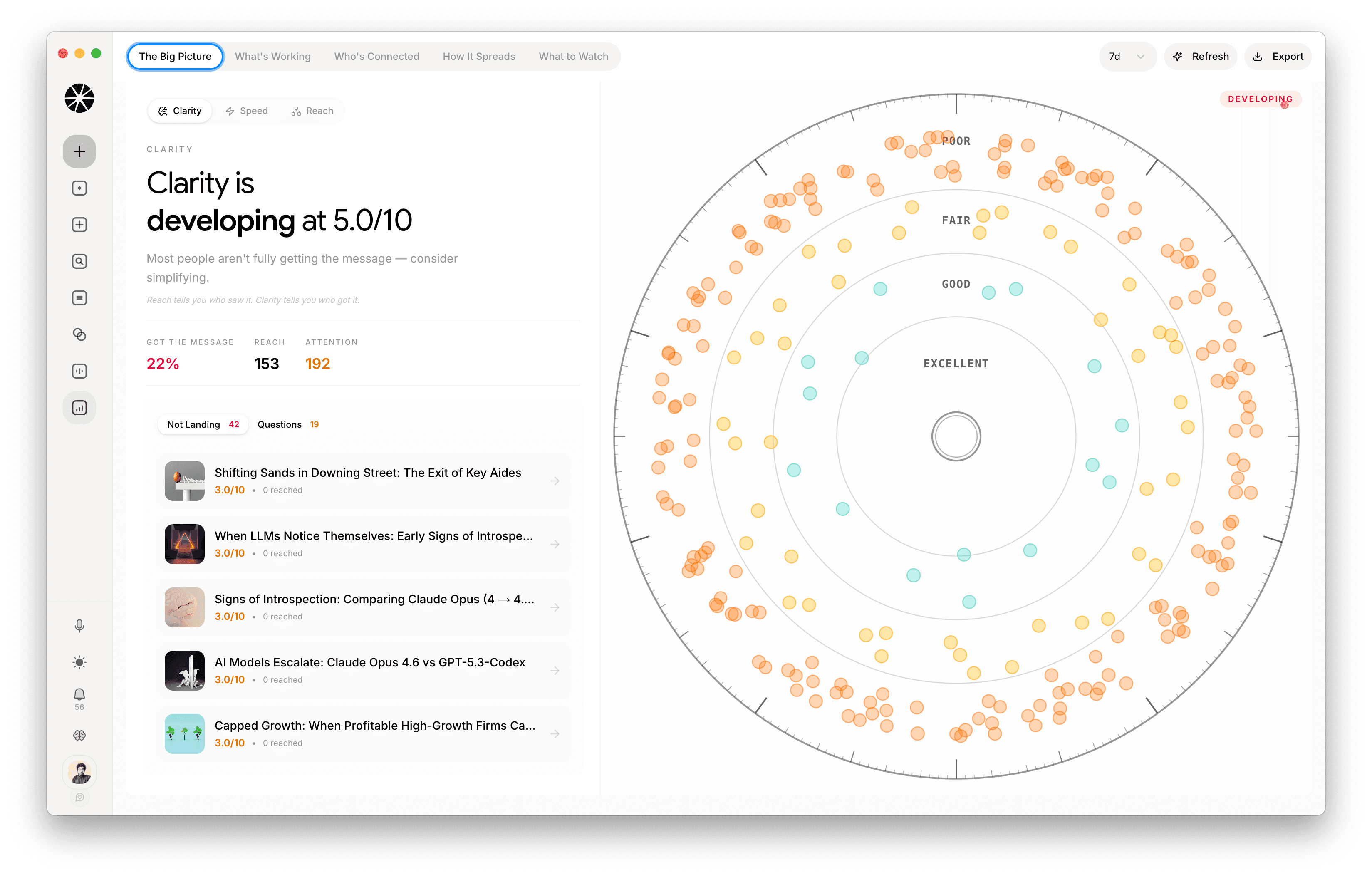
See what actually landed.
Orient calculates where clarity held, where meaning decayed, and which audiences understood the message.
Improve
Use real signals to strengthen the next version.
Every version gets sharper. Communication compounds.
Remember
Every message strengthens the system.
The more you use Orient, the sharper it becomes.
Most communication is published, not understood. Orient measures what actually landed.
For every piece of communication, Orient calculates where clarity held, where meaning decayed, and which audiences understood the message.
Completion quality
Did they finish — or skim?
Attention depth
Where did focus hold?
Clarity decay
How meaning erodes across teams.
Retention lift
vs. unstructured communication.
Comprehension score
A single signal for whether it landed.
Audience fit
Who understood, and who didn’t.
Go beyond internal knowledge.
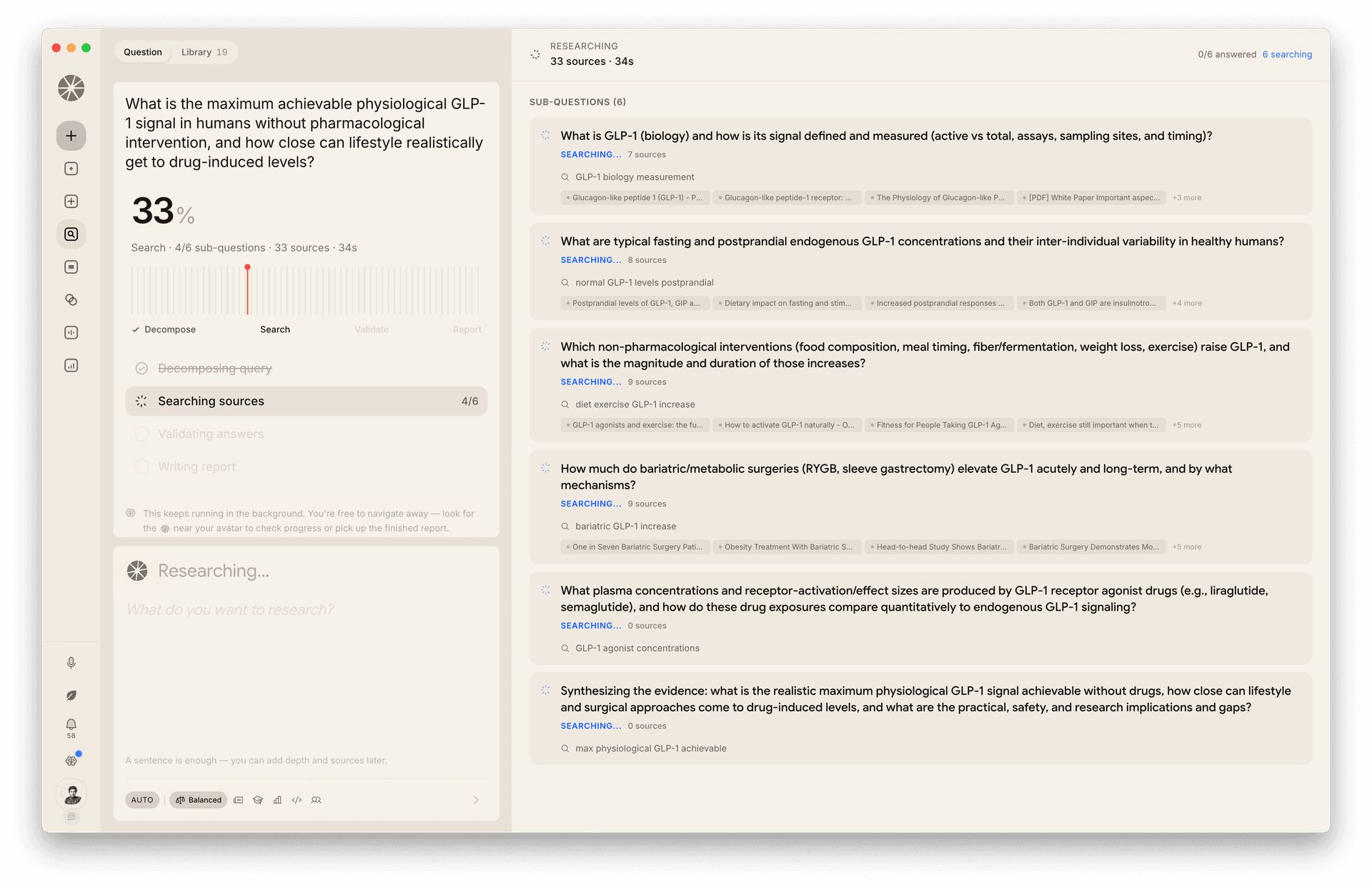
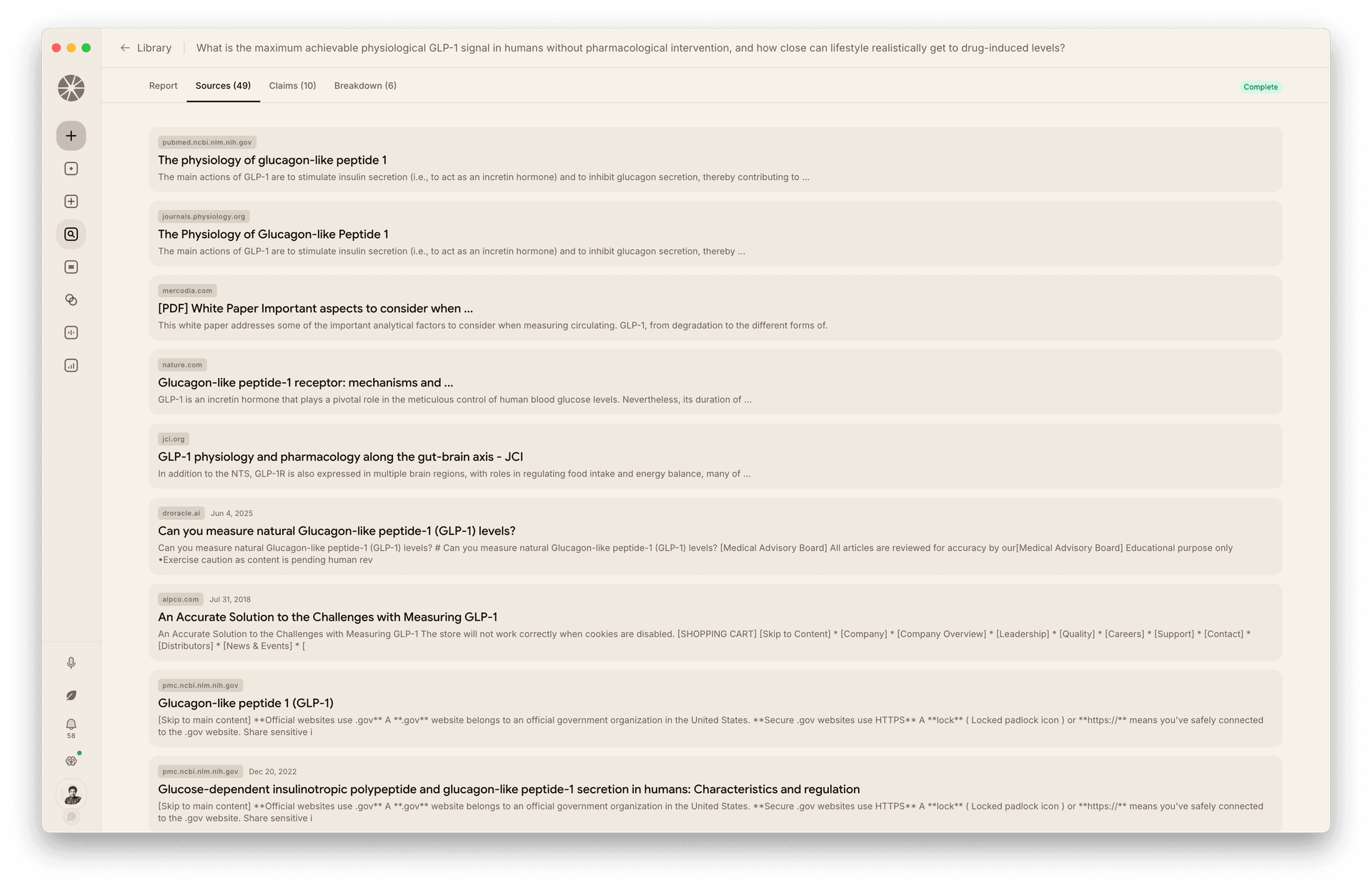
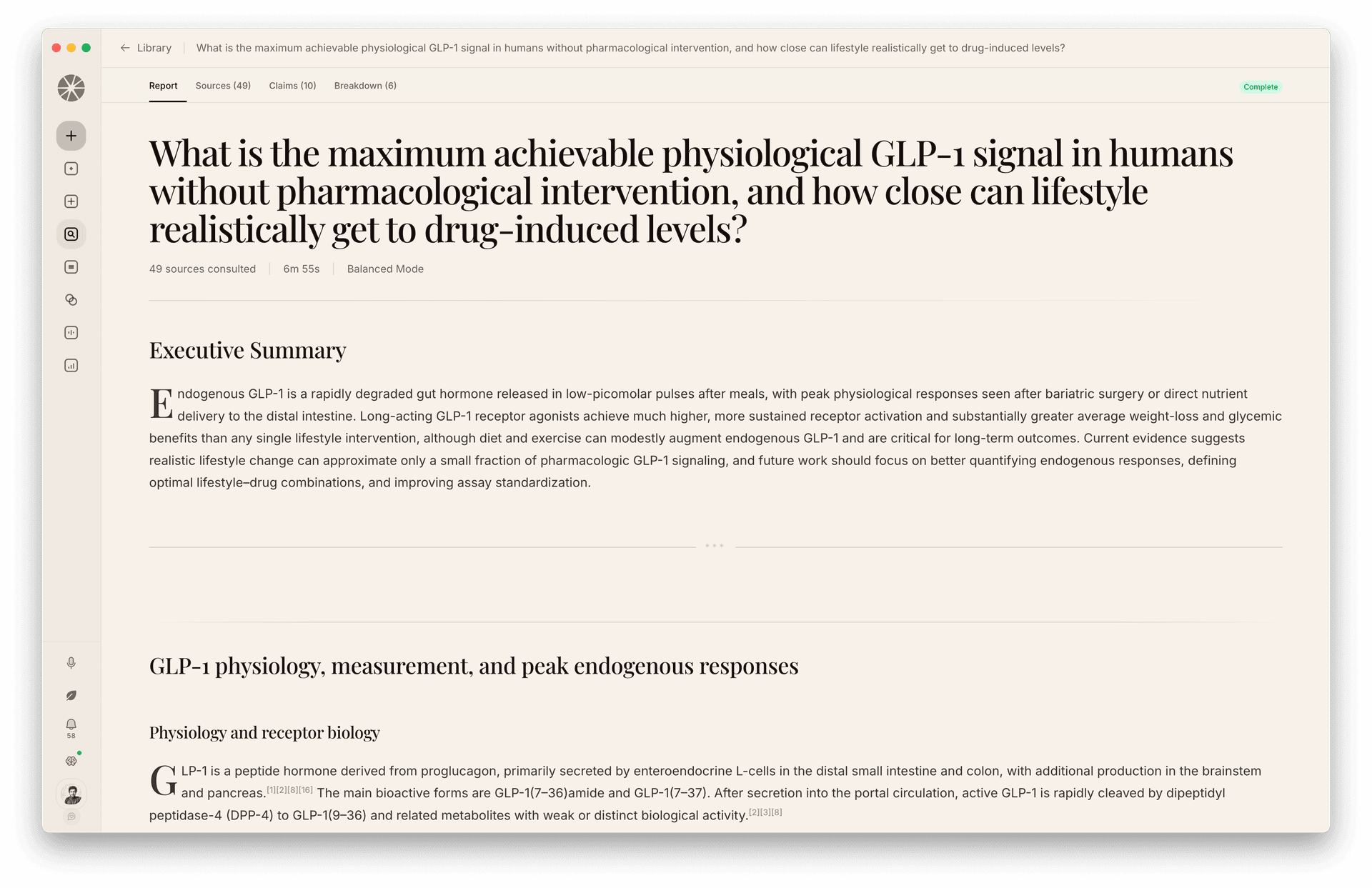
Orient decomposes complex questions, gathers multi-source evidence, validates claims, and produces structured reports with confidence scoring.
Research feeds directly into communication. Insight moves from investigation to expression.
One model. Many expressions.
Orient supports every mode of organisational communication.
Strategy decks, investor updates, board packs, vision narratives, quarterly reviews.
Meeting recaps, decision memos, product updates, release notes, roadmap reviews, risk briefs.
Onboarding, playbooks, SOPs, knowledge briefs, training explainers, research summaries.
Pitch decks, case studies, demo decks, thought leadership, webinar presentations.
Different contexts. Different audiences. Different stakes. One meaning layer beneath them all.
You don’t just publish. You know what landed.
See how Orient helps organisations preserve meaning, measure understanding, and build communication that improves over time.